
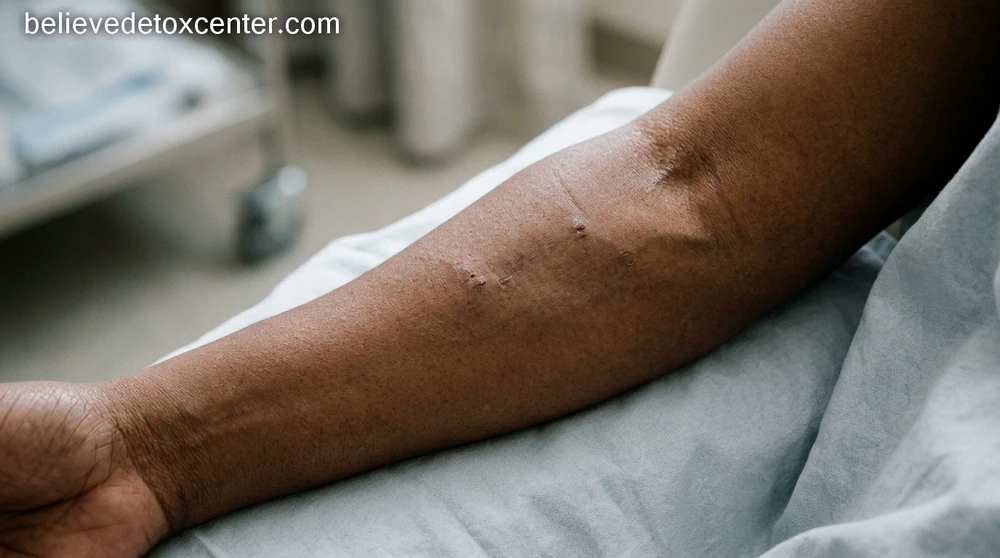
What Are Track Marks?
Track marks are visible scars, punctures, bruises, or hyperpigmentation left on the skin from repeated intravenous (IV) drug use. When a needle repeatedly punctures the same vein — often in the inner elbow, forearms, hands, or even feet — it causes trauma to the blood vessels and surrounding tissue.
Over time, this repeated trauma leads to inflammation, scarring, and the darkening of the skin along the path of the vein (which is why they are called “tracks”). While they are a physical byproduct of injecting substances like heroin, meth, or prescription opioids, track marks carry a heavy emotional weight. For many, they are a constant, visible reminder of the struggle with addiction, making people feel judged or forced to hide their arms, even in the middle of summer.
Can Track Marks Heal? The Honest Answer
If you are tired of wearing long sleeves and hiding your skin, you are likely wondering if these marks will ever go away. The honest answer is: yes, they can significantly heal, but the extent of the recovery depends on the severity of the damage.
When you stop injecting, the body’s natural healing process kicks in almost immediately. Fresh puncture wounds will close, and bruising will begin to fade. However, if a specific site has been used chronically for months or years, the constant scarring can cause the vein to collapse or create thick, raised scar tissue (keloids). While these deeper scars and dark spots may never completely vanish, they will fade significantly over time, blending much more naturally into your skin. The most crucial factor in reversing the damage is giving your skin and veins a complete break from needle use.
Track Mark Healing Timeline
Healing doesn’t happen overnight, and the body needs time to repair the vascular damage. Here is a general timeline of what you can expect when you stop injecting:
-
1 to 3 DaysFresh MarksRedness, fresh scabbing, bruising (black, blue, or purple), and mild swelling. Inside: Your body is actively fighting to close the open puncture wounds and stop any localized bleeding.
-
1 to 3 WeeksEarly HealingBruises fade to yellow or green. Scabs naturally fall off, leaving pinkish or slightly dark new skin. Inside: Skin tissue is repairing itself. Inflammation decreases as the body clears out damaged cells.
-
Months to YearsLong-Term HealingFlat, white scars or dark spots (hyperpigmentation). Veins may feel hard or "rolled." Inside: Permanent tissue remodeling. While deep scars won't disappear entirely, they will lighten drastically and become less noticeable.
Safe Skin Care & What NOT to Do
If you are dealing with healing track marks, taking care of your skin can prevent permanent damage. Here is practical guidance for managing your skin safely:
Protect the healing skin
- Wash gently — use warm water and a mild, unscented soap to clean the area daily. Keep it dry.
- Protect from the sun — sun exposure can make scars permanently darker. Once wounds are fully closed, use sunscreen on the scars.
Avoid these mistakes
- Pick at scabs — picking re-opens the wound, guarantees a worse scar, and introduces bacteria from your fingernails.
- Use heavy makeup on open wounds — putting makeup on unhealed skin is a primary cause of infection.
- Use harsh chemicals — avoid rubbing alcohol or hydrogen peroxide on healing skin, as they damage the new cells trying to grow.
When Track Marks Are a Medical Emergency
- Redness that is rapidly spreading outward from the injection site.
- Skin that is hot to the touch or severely swollen.
- Yellow, green, or foul-smelling pus draining from the wound.
- Red streaks traveling up your arm or leg toward your heart.
- A sudden high fever, chills, or extreme lethargy.
Why Track Marks Keep Coming Back (The Real Cause)
Treating the skin is only treating the symptom. Track marks keep returning because the underlying disease of addiction demands it. We know how exhausting the cycle is — waking up, finding a usable vein, dealing with the physical pain, and then carrying the shame of the visible scars.
The compulsion to inject is driven by profound changes in the brain’s chemistry, not by a lack of willpower. Trying to heal your arms while still battling active addiction is an uphill fight. The only permanent way to reverse the damage to your body, your mind, and your skin is to address the root cause through comprehensive medical detox and rehabilitation.

For Families: What Track Marks Mean & How to Start the Conversation
Discovering track marks on a son, daughter, or partner is a terrifying and heartbreaking moment for any family. It is undeniable visual proof that a loved one is in deep pain and facing a severe substance use disorder.
If you see these marks, avoid approaching them with anger, accusations, or judgment. Your loved one already feels a massive amount of shame about their arms. Instead, start the conversation with empathy. Choose a quiet, private moment and say something like, “I love you, and I am deeply worried about your health. I’m not here to judge you, but I want to help you get the support you need.” Focus on their safety and well-being rather than the drug use itself.
Frequently Asked Questions
Do track marks go away?
Can you donate plasma with track marks?
Do track marks disqualify you from certain jobs?
Does laser treatment work on old track marks?
How long until scarring fades?
Are track marks always from heroin use?
Take the First Step Toward Real Healing
You don’t have to carry the physical and emotional scars of active addiction forever. At Believe Detox Center, we provide a safe, licensed, and deeply compassionate environment to help you detox comfortably and start a new chapter. Let your body and mind heal.
Call us today at (818) 396-9911 or (626) 635-3737 to speak confidentially with our admissions team. You are not alone in this journey.